
October 10, 2024
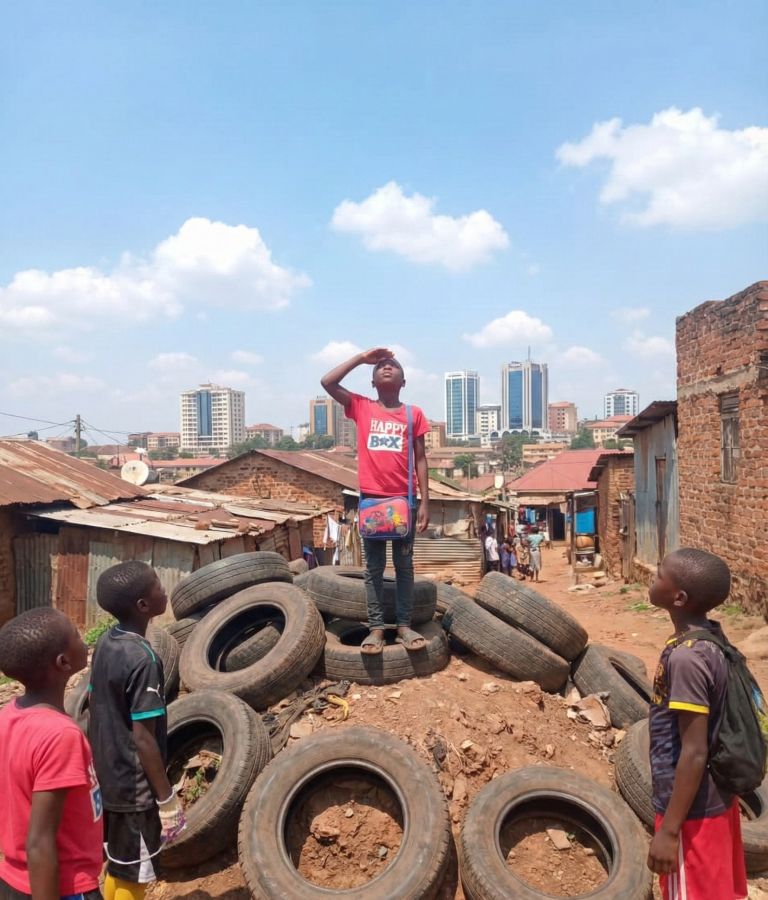
Walk through the pathways of Wakiso, and the needs are obvious. You see the patched roofs that leak when it rains. You see the children wearing school uniforms three sizes too big. You hear the complaints of mothers worried about the rising price of maize flour.
These are the visible wounds of poverty. For four years, Fecane Child Foundation has been applying bandages to these wounds—providing food, education, and economic opportunities.
But today, on World Mental Health Day, we must talk about the wounds we cannot see. We must talk about the silent, corrosive damage that poverty inflicts on the human mind, particularly the developing minds of children.
If we only feed the stomach but ignore the traumatized brain, we are only doing half the job.
Poverty is a Chronic Stressor
We often think of trauma as a single, terrifying event—a car crash, a violent attack. But for a child growing up in extreme urban poverty, trauma is not an event; it is an environment.
It is the chronic, low-level hum of anxiety. It’s the fear in their mother’s voice when rent is due. It’s the shame of being sent home from school because fees aren’t paid. It’s the lack of a safe, quiet space to just be.
Science tells us that when a child’s brain is stuck in this constant state of “fight or flight,” it physically changes. Their bodies are flooded with stress hormones. A child in this state cannot learn algebra. They cannot dream about the future. Their entire biological system is focused solely on surviving the next hour.
Breaking the Silence in Wakiso
For too long, mental health has been a taboo subject in our community. Depression is often dismissed as laziness. Anxiety is sometimes mislabeled as a spiritual problem.
At Fecane, we are breaking this silence. We are normalizing the conversation that it is okay not to be okay.
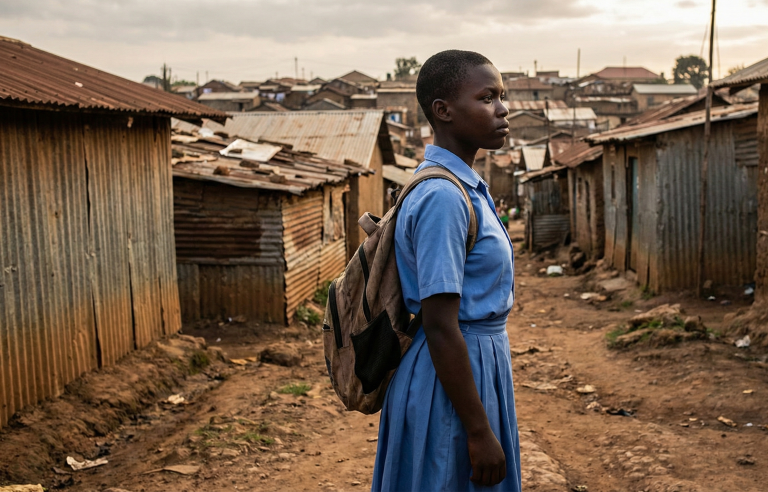
We are seeing teenagers—especially young men who feel the immense pressure to provide—struggling with crushing despair. We are seeing young girls facing the anxieties of early sexualization and exploitation. To ignore this is negligence.
“You can give a child the best textbook in the world, but if their mind is a battlefield of fear and anxiety, they cannot read it. We must heal the heart to unlock the brain.”
Fecane’s Approach: Psychological First Aid
We are not building a psychiatric hospital. Instead, we are integrating “Psychological First Aid” into everything we do.
Over the last year, we have begun training our core volunteers and mentorship leaders not just in logistics, but in active listening and trauma-informed care.
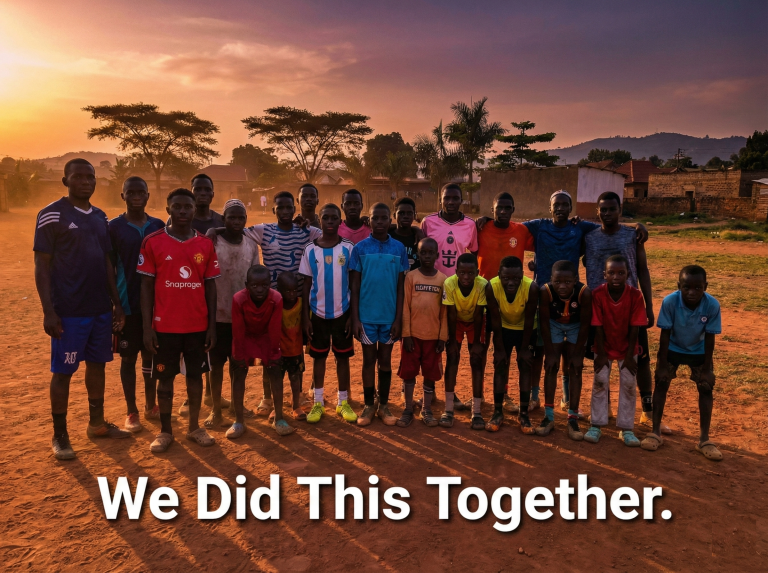
- Safe Spaces: Our workshops and football programs are designed to be sanctuaries where children can lower their defenses.
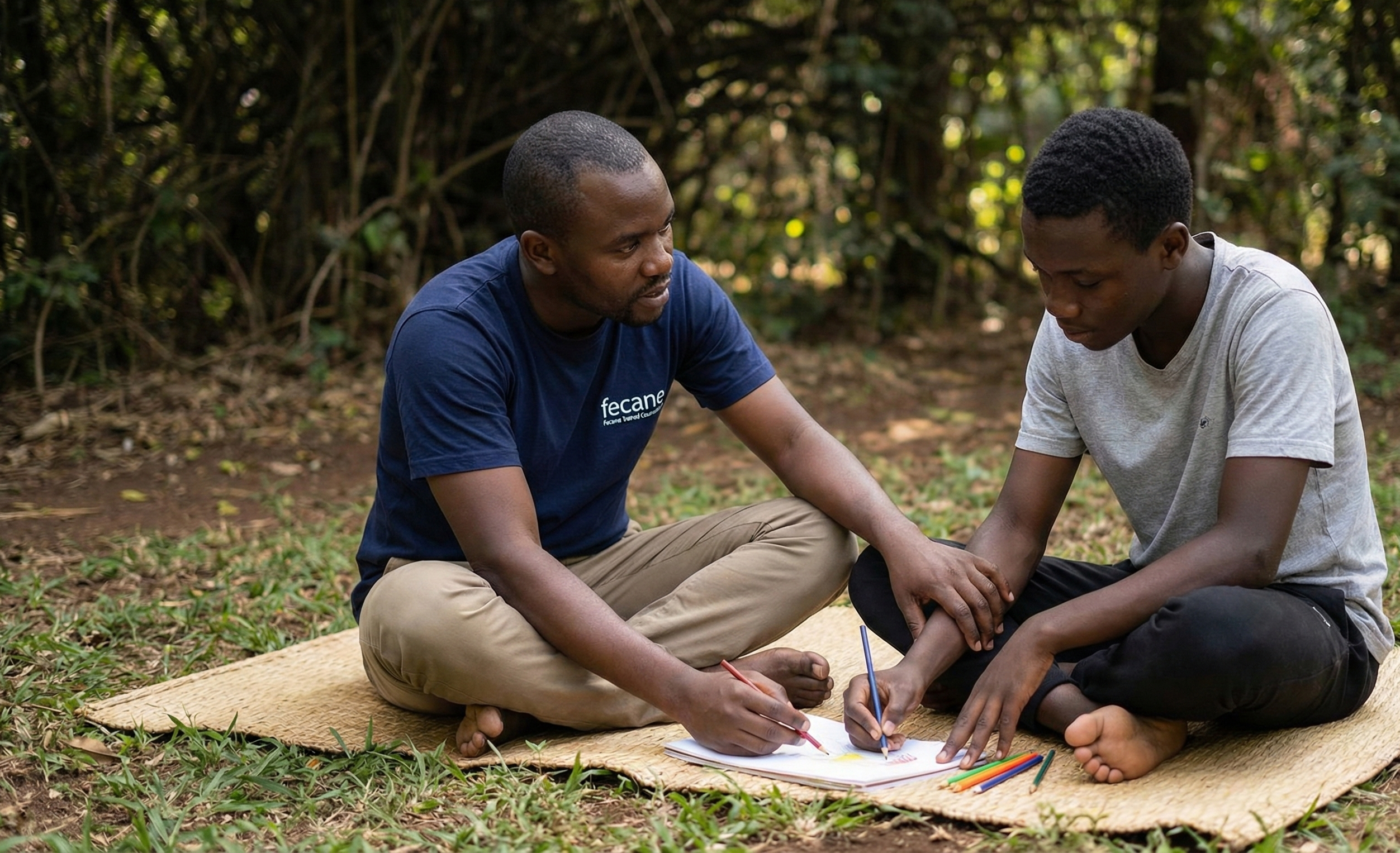
- Mentorship Circles: We are creating small groups where teenagers can articulate their fears without judgment.
- Art and Play Therapy: For younger children who do not have the words for their pain, we are using drawing and play to help them process their emotions.
We are learning that sometimes, the most powerful thing we can offer a child isn’t a bag of rice, but 30 minutes of undivided, compassionate attention.
The Foundation for All Future Success
As we continue to grow and professionalize our operations in 2024, mental health support is no longer a “nice to have” side project. It is a pillar of our methodology.
We know that economic empowerment projects will fail if the participants are paralyzed by hopelessness. We know that educational scholarships will be wasted if students are too traumatized to focus.
Healing the trauma of poverty is slow, difficult work. It doesn’t offer the quick photo opportunity of a food distribution. But it is the only way to build lasting resilience.
The biggest barrier to providing this support isn’t a lack of need; it’s a lack of trained people. We need to equip more community mentors with the skills to provide basic counseling.
Help us train the healers. Your donation today goes directly toward funding our “Community Psychosocial Training Program,” equipping local leaders to support our children’s mental health. Sponsor the Training of a Community Mentor