
June 5, 2023
If you stand on the periphery of Wakiso, past the bustling markets and the residential areas, you will hear it before you see it. Clack. Clack. Clack.
It is a relentless, rhythmic sound that continues from dawn until dusk. To an outsider, it sounds like construction, perhaps progress. But when you get closer, walking over the jagged piles of gray aggregate, you realize the horrifying truth of who is making that sound.
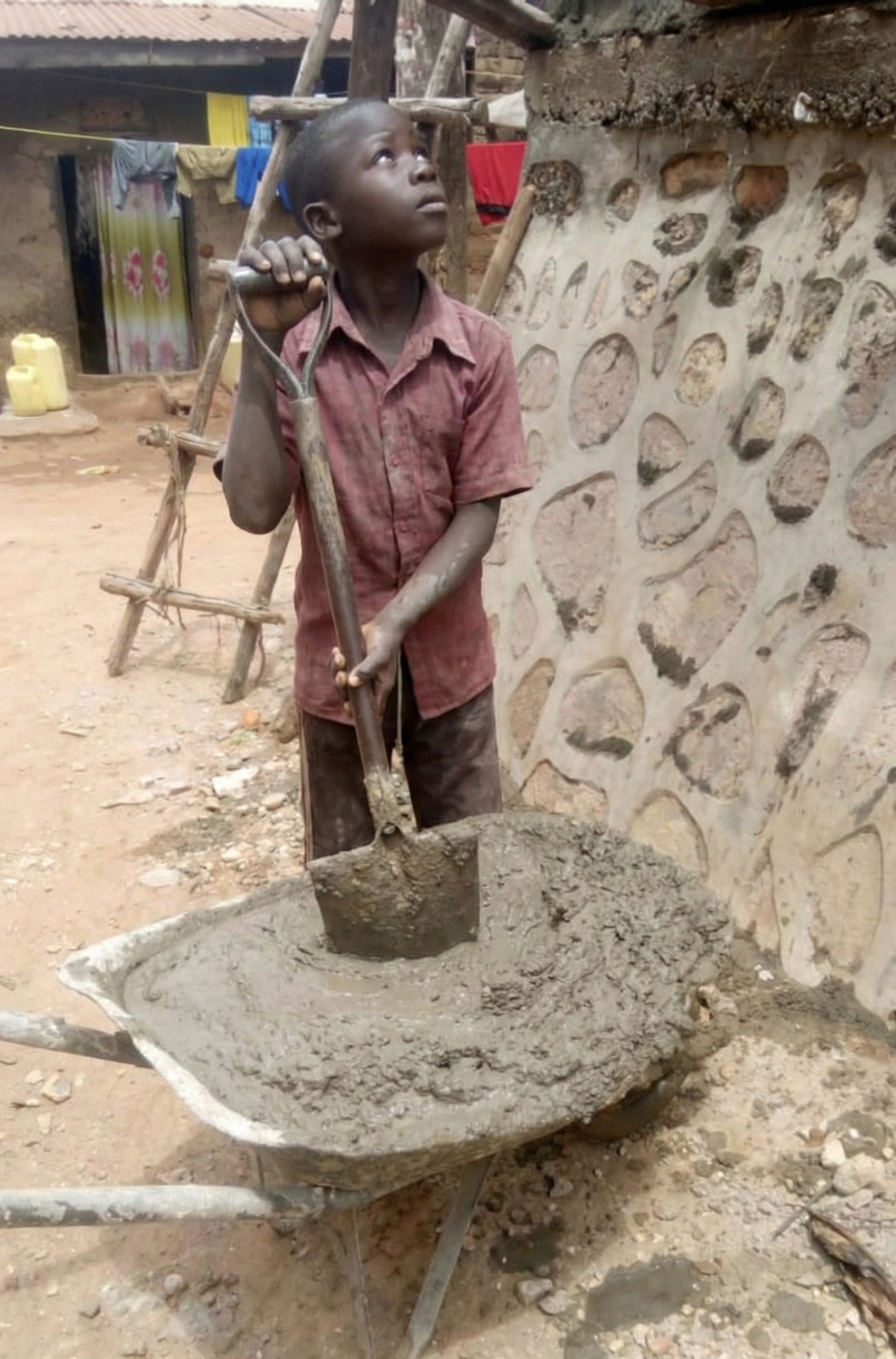
It is the sound of an eight-year-old boy, sitting cross-legged in the dust, using a heavy metal hammer to smash large rocks into gravel. He is not playing. He is earning the equivalent of less than a dollar a day to help his family eat tonight.
As we approach the World Day Against Child Labour, Fecane Child Foundation is shining a light on the darkest corners of our community. We cannot talk about a bright future for Uganda while our youngest citizens are breaking their backs in stone quarries.
The Economics of Desperation
No parent dreams of sending their second-grader to work in a quarry. This reality is born out of crushing economic necessity. The post-pandemic inflation has pushed families who were already on the brink right over the edge.
When the choice is between starvation and sending a child to break rocks, desperation wins.
But the cost of this survival is catastrophically high. We see children in these quarries inhaling toxic stone dust day after day, leading to lifelong respiratory issues. We see permanent injuries from flying stone shards. We see bodies meant to be growing stunted by heavy labor.
A Pencil Weighs Less Than a Hammer
The greatest tragedy, however, is the opportunity cost. Every hour a child spends in the quarry is an hour they are not in a classroom.
At eight years old, a child’s brain is a sponge, ready to absorb languages, mathematics, and art. Instead, these children are learning the brutal physics of breaking stone. They are trapped in a cycle where their only marketable skill is manual labor—a cycle that will almost certainly keep them poor for the rest of their lives.
We are creating a generation of laborers instead of a generation of thinkers, leaders, and innovators.
“A child’s hands are designed to hold a pencil, to throw a ball, to turn the pages of a storybook. When we force those hands to wield a hammer for survival, we are not just stealing their childhood; we are robbing their entire future.”
Fecane’s Commitment: Intervention and Education
We cannot just observe this and write reports. Fecane is actively identifying children in these high-risk labor zones.
Our social workers are having difficult, compassionate conversations with parents, helping them understand the long-term damage of quarry work. We are working to create economic alternatives for mothers so they don’t have to rely on their children’s wages.
But the ultimate solution is simple: School.
The only place for an eight-year-old is a safe classroom. Education is the only force strong enough to break the gravitational pull of the quarry. We must make school accessible, affordable, and mandatory for these children.
We have identified 25 children currently working in the quarries who are ready to leave the hammers behind and return to school next term.
It costs money for uniforms, fees, and supplies to make that transition happen. Help us swap a hammer for a backpack. Sponsor a Child Laborer’s Return to School