
March 22, 2025
Today is World Water Day. Across the globe, conferences are being held and speeches are being given about the importance of clean water access.
But here in Kampala, in the low-lying, densely packed communities of Bwaise and Kawaala, we didn’t have time for speeches. We know that when the rains come—and they are coming soon—water here ceases to be a life-giver and becomes a life-taker.
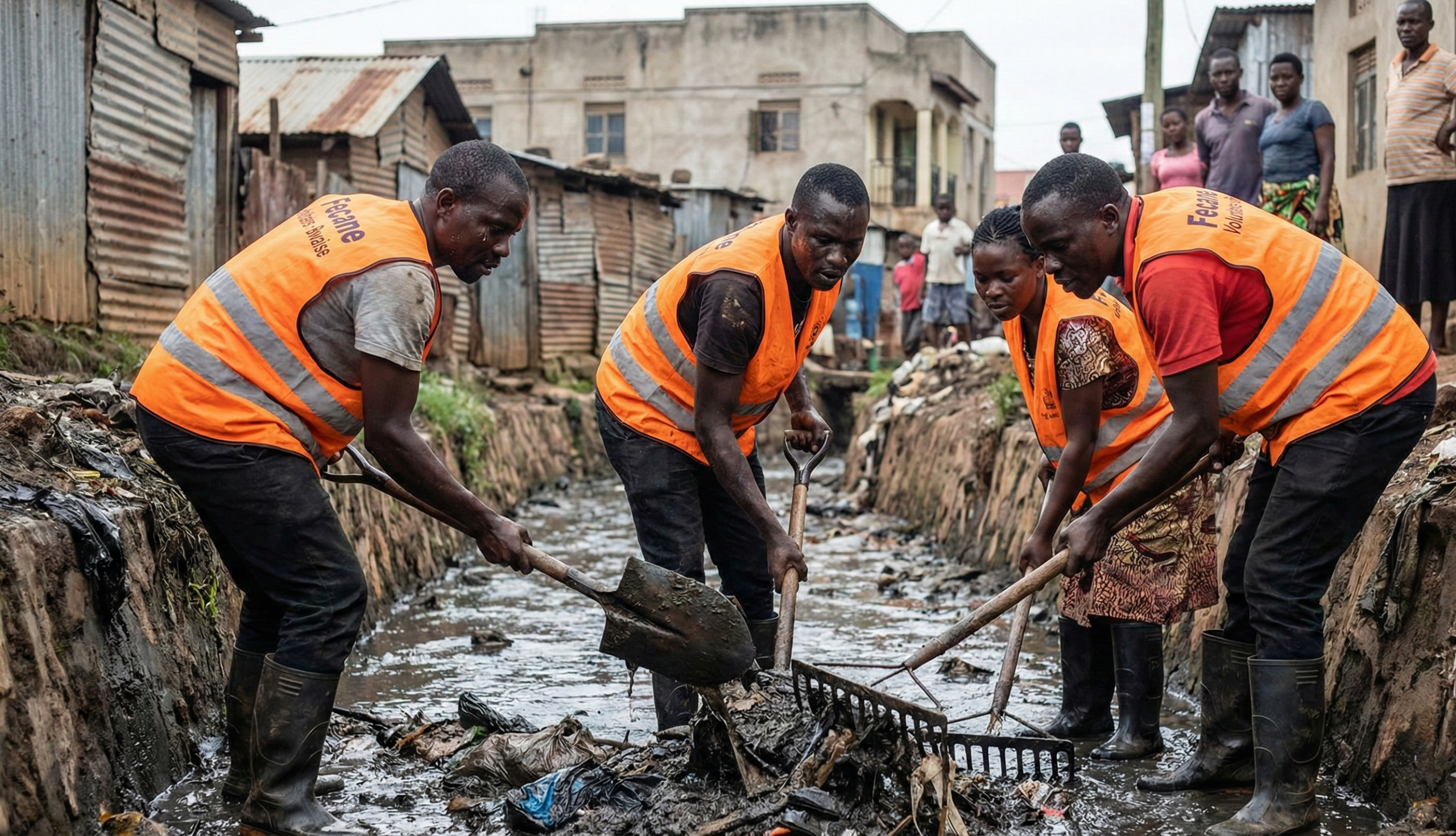
In these communities, the battle for health isn’t fought in hospitals; it’s fought in the drainage trenches and at the communal taps. That is why Fecane Child Foundation spent today doing the unglamorous, back-breaking work of cleaning the infrastructure that keeps these communities alive.
The Invisible Enemy in the Trenches
Bwaise and Kawaala are notorious for severe flooding. The primary culprit isn’t just the rain; it’s the solid waste—plastic bottles, bags, and silt—that completely blocks the drainage channels.
When these trenches are blocked, two things happen:
- Flooding: Water backs up and floods homes with sewage-contaminated filth.
- Disease: Stagnant pools of water become breeding grounds for malaria-carrying mosquitoes and incubators for cholera and typhoid.
Today, our team of volunteers, alongside local community members, put on gumboots and grabbed shovels. We cleared hundreds of kilos of compacted sludge from critical choke-points in the drainage network. We aren’t just moving dirt; we are preemptively fighting a public health crisis.
H2: The Critical Point of Contact: The Taps
While one team was in the trenches, another was at the taps.
In Kawaala, thousands of residents rely on a few communal water points. These taps are touched by hundreds of hands every single day. They are often coated in grime and bacteria, becoming a vector for disease transmission right at the source of clean water.
We deployed teams with scrubbing brushes, soap, and disinfectant to deep-clean these vital water points. We didn’t just clean them; we held impromptu hygiene sessions with the children and mothers waiting in line, reinforcing the message that clean water needs clean hands.
“In the slums, ‘World Water Day’ is not a celebration; it is an ongoing battle. A clean trench means a dry floor tonight. A scrubbed tap means one less child with typhoid tomorrow. This is preventative medicine in its rawest form.”
Community Ownership is Key
We made sure today wasn’t just Fecane staff working for the community. It was work done with the community.
The most encouraging sight today was seeing local youth and elders coming out of their homes to join us. They know better than anyone the dangers of blocked drains. By working together, we are fostering a sense of ownership—ensuring that the next time someone thinks about throwing a plastic bottle in the trench, their neighbor will stop them.
We are tired of waiting for the next flood to respond with emergency aid. Today was about prevention.
Cleaning these trenches is terrifying, dirty work. Our volunteers need proper protective gear to do it safely without risking their own health.
We need to make this a regular monthly activity, not just a once-a-year event. We urgently need funds for heavy-duty gumboots, thick rubber gloves, industrial spades, and disinfectant supplies. Equip Our Sanitation Team for the Next Cleanup