
November 12, 2020
Over the last month, since settling into our new office and spending every day deep in the community pathways of Wakiso, a hard truth has settled over us.
We have big plans for these children. We want to launch a football academy to teach discipline and teamwork. We want to start literacy programs to help kids like Musa catch up on missed schooling. We have the volunteers ready, and we have the passion.
But we have realized something fundamental: None of those programs will work right now.
Why? Because you cannot talk to a child about algebra or football tactics when their stomach is twisting with hunger. The economic fallout of the extended lockdown means many families here have reduced their intake to one meal a day—usually late at night. That means children are waking up hungry and existing in a fog of low energy until sunset.
The Maslow Requirement
We had to pause our bigger ambitions and address the immediate reality. Before a child can dream, they must eat.
We looked at the simplest, most culturally appropriate, and most cost-effective solution: Maize porridge. It is warm, it is filling, and when fortified with a little sugar and milk, it provides the immediate caloric energy a child needs to face the day.
But we didn’t want to just hand out food randomly one day and run out the next. We needed a system. We needed to test our capacity.
Why Only Ten Kids?
This week, we launched what we are calling the “Porridge Project.” But we didn’t announce it with fanfare to the whole community. Instead, we quietly selected the ten most critically vulnerable children we have identified during our past six months of work—the ones whose frames are too slight, whose energy is too low.
To some, starting with ten kids might seem too small to mention. To us, starting small is the only responsible way to begin.
This is a pilot program. We are using this phase to answer critical logistical questions: What is the exact cost per cup? How do we ensure hygiene during preparation? How do we track the health improvements of these specific children over 30 days?
“We are not trying to feed the whole world today. We are trying to prove that we can feed ten children consistently, nutritiously, and sustainanbly. Once we prove the model works, then—and only then—will we scale.”
The First Serving
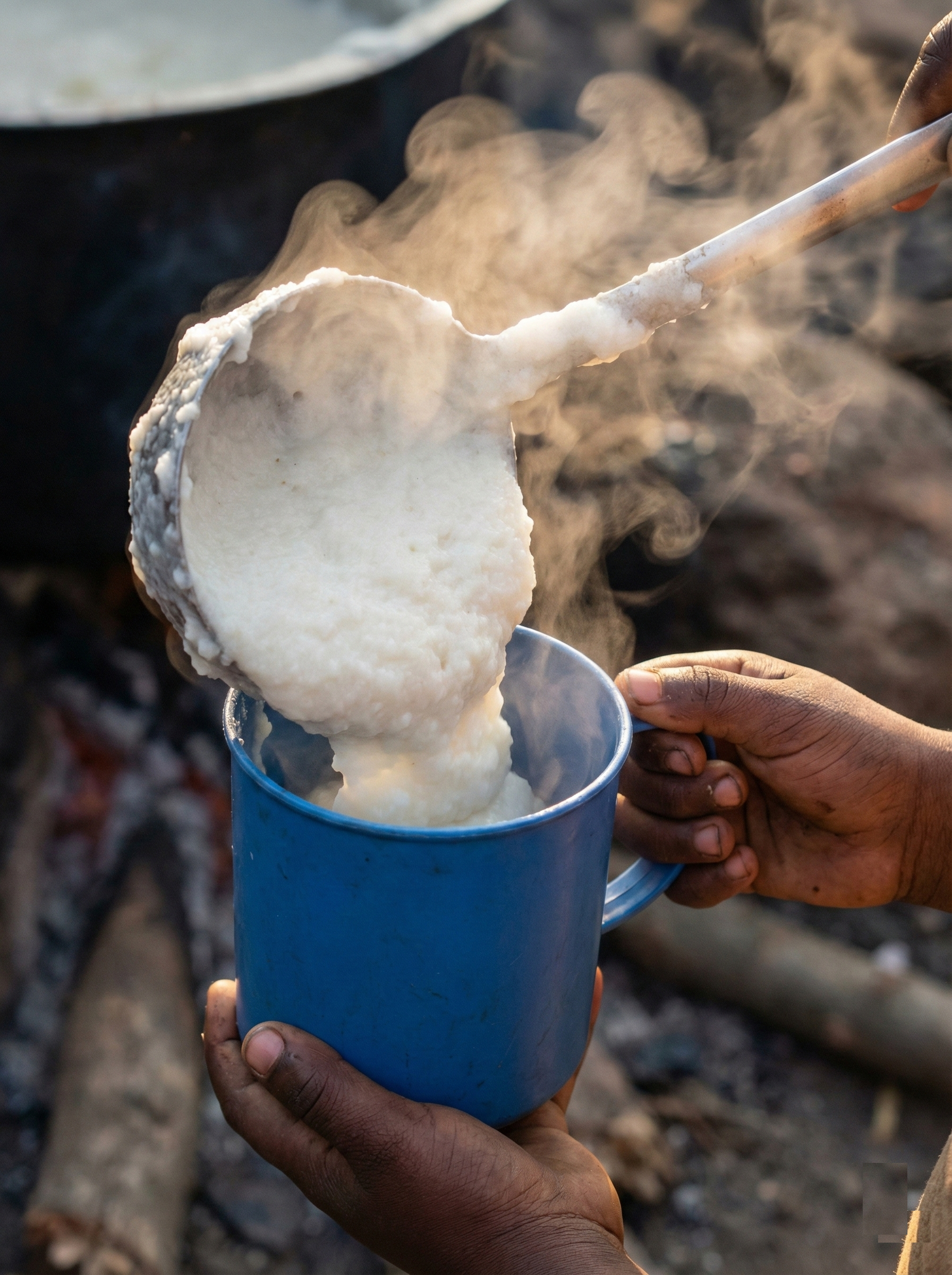
Yesterday morning, the first batch was ready. The steam rose from the large metal pot in our small makeshift kitchen area.
When those ten children held the warm mugs in their hands, the atmosphere changed. The relief wasn’t just in the children; you could see the tension leave the shoulders of their mothers standing nearby. For one morning, that was one meal they didn’t have to worry about.
The cups were emptied quickly. Eyes were brighter. For a few hours, those ten kids had the energy to just be kids. It’s a small start, but the proof of concept is undeniable.
The pilot is working. We have calculated the costs, and we know how to deliver this program efficiently.
Now, we need to turn this pilot into a permanent program and expand it. There are dozens more children waiting just outside that circle of ten. It costs just $15 to provide daily warm porridge for one child for an entire month. Will you add a mug to the table? Sponsor a Child’s Breakfast for a Month